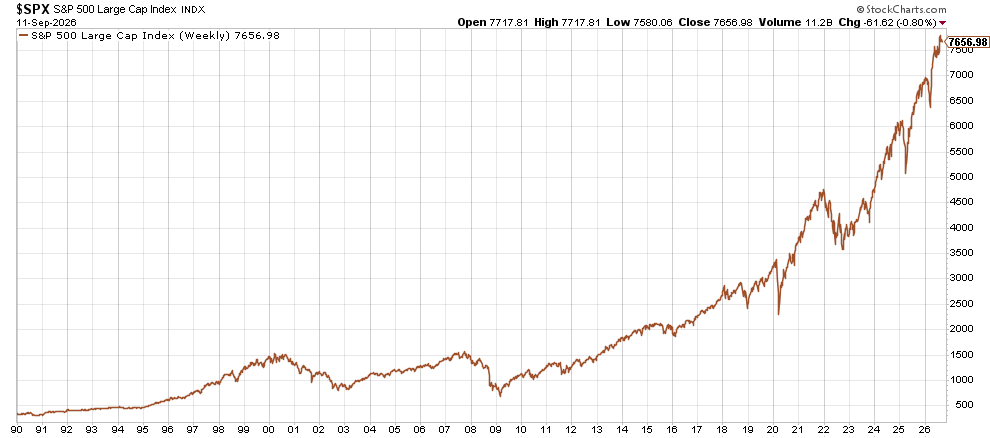
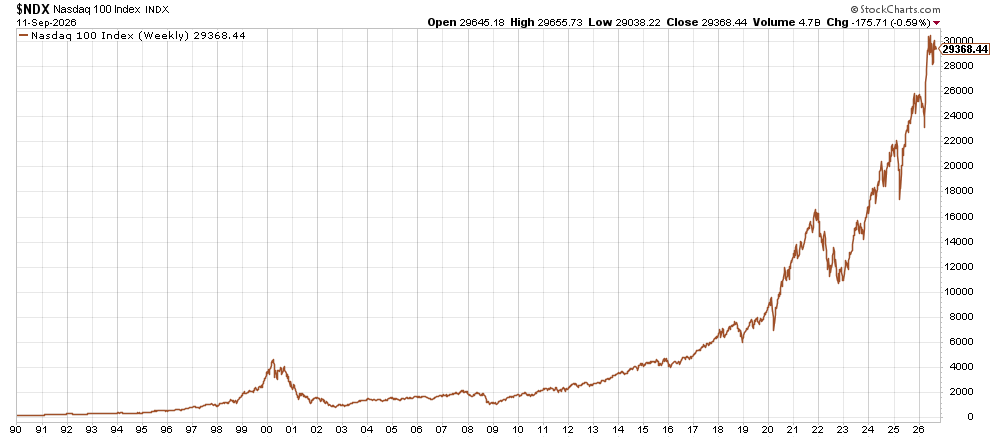
WHY DOES THE U.S. EQUITY MARKET HAVE A TRAJECTORY?
An Economy of
Continuity and Cycles
The U.S. economy has demonstrated a long-term capacity for continued development, supported by productivity, innovation, capital formation, technological progress, and the creation and growth of new businesses.
That development does not occur in a straight line. Periods of expansion, slowdown, contraction, and recovery create recurring economic cycles within the longer course of growth.
Continued Growth Extends the Long-Term Trajectory.
Economic Cycles Keep It From Moving in a Straight Line.
A Market Where Capital Continuously Expresses Its Judgment
A market trajectory requires a market structure through which changing economic conditions, information, expectations, opportunities, and risks can be continuously translated into investment decisions and market prices.
LIQUIDITYCapital can enter, exit, and reposition.INSTITUTIONAL CAPITALSubstantial continuously managed capital.PRIVATE CAPITALA broad additional source of participation.TECHNOLOGYFaster information, analysis, communication, and execution.
INFORMATION → JUDGMENT → CAPITAL → PRICE
An Index That Evolves With the Economy
The Index Is Not Static.
The companies and industries that lead the U.S. economy change over time. New businesses emerge, technologies advance, and industries evolve.
The S&P 500 and Nasdaq-100 are therefore not permanently fixed collections of companies. Constituents may be added or removed under their respective index methodologies as companies and the markets they represent evolve.